
- All
- Product Name
- Product Keyword
- Product Model
- Product Summary
- Product Description
- Multi Field Search
 English

Views: 226 Author: Site Editor Publish Time: 2026-09-19 Origin: Site
When purchasing synthetic leather for automotive interiors, many modification shops and overseas buyers encounter pitfalls. Leathers that look similar can differ greatly in heat resistance, aging resistance and odor. Low-grade materials may peel, fade or release strong odors after installation. Learning to judge leather quality helps you avoid defective products and select durable materials for vehicle interiors.
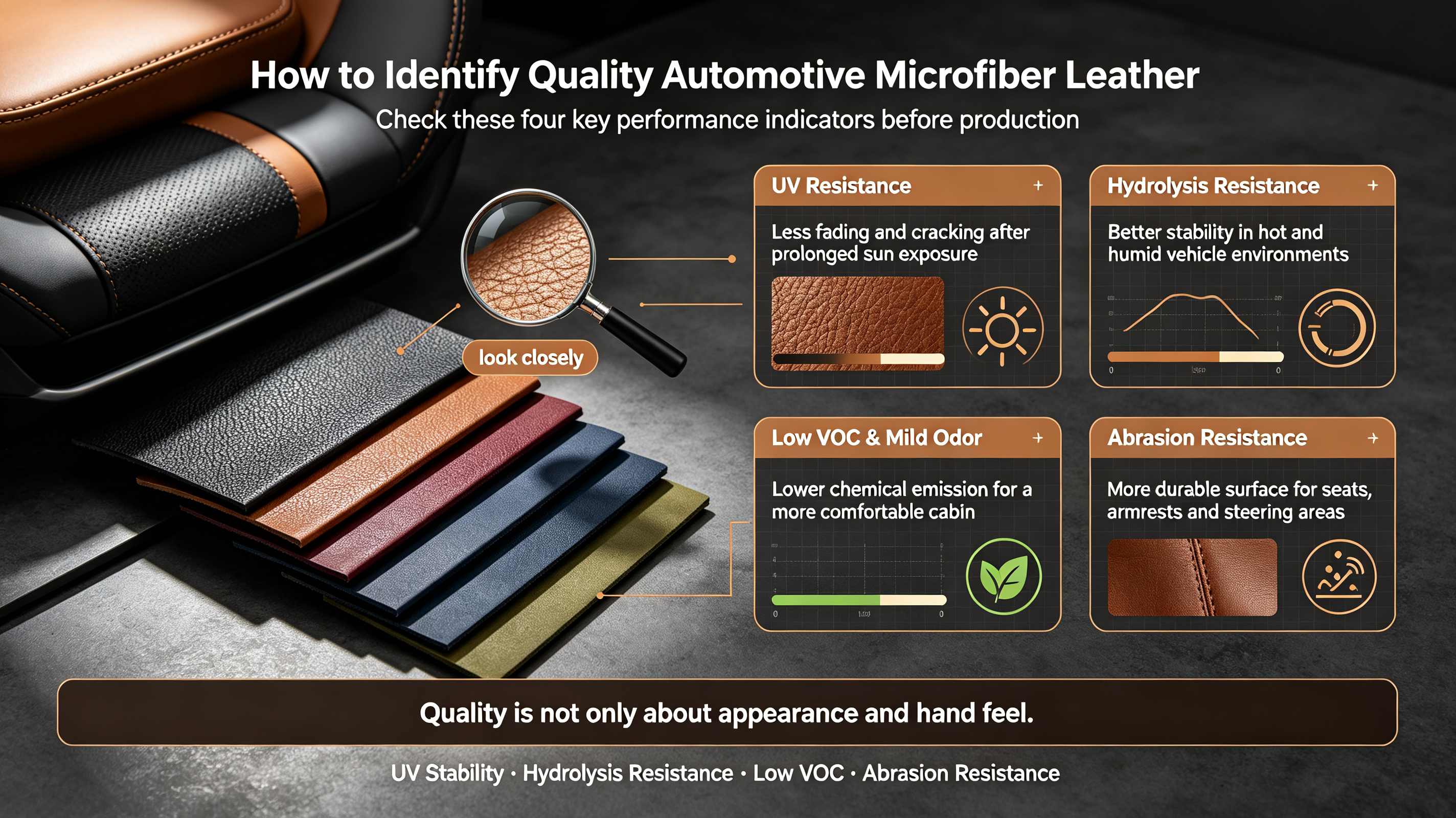
Car interiors are constantly exposed to sunlight. Inferior synthetic leather fades and cracks easily under UV radiation. Automotive-grade microfiber leather is formulated with UV stabilizers, resisting discoloration under long-time sun exposure, ideal for seats and other sunlit areas.
High temperature and humidity inside vehicles can cause ordinary synthetic leather to hydrolyze and crumble. Premium microfiber leather features strong hydrolysis resistance and keeps surface integrity under hot and humid conditions, perfect for tropical climates. Poor-quality material will delaminate quickly after short-term use.
Low VOC is essential for auto upholstery. Cheap leather often carries sharp chemical smells that linger inside closed cabins. Our automotive microfiber leather has strictly controlled VOC with mild odor, complying with interior environmental standards.
Seats, armrests and steering wheels endure constant friction. The surface of inferior leather wears through easily. High-quality microfiber leather has strong wear resistance, resisting abrasion and damage to extend interior service life.
Do not judge automotive leather merely by appearance and hand feel. The key evaluation criteria include UV stability, hydrolysis resistance, low VOC and great abrasion performance. We supply automotive microfiber leather and PVC synthetic leather with custom service available. Samples can be sent for your testing.


